Mentorship as a Leadership Multiplier: The Business Case for Investing in the Next Generation
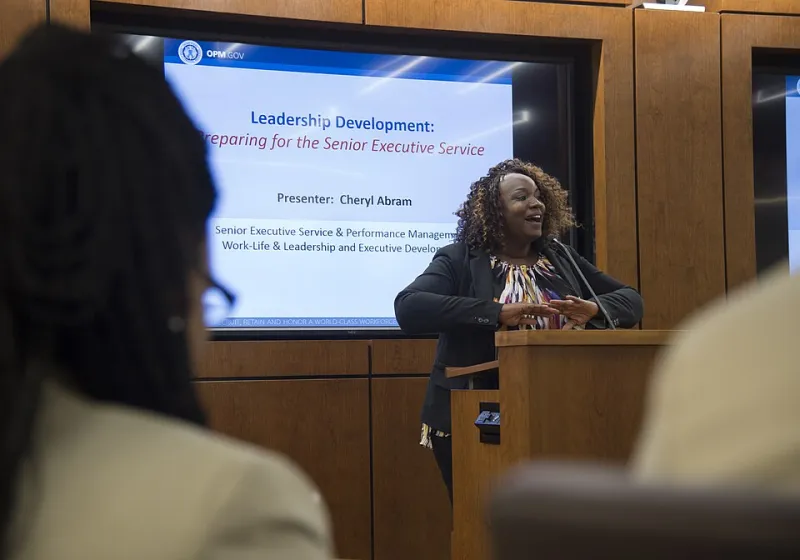
Photo: U.S. Department of Energy from United States, Public domain, via Wikimedia Commons
In boardrooms and executive suites across the United States, a quiet shift is underway. The most forward-thinking leaders are no longer treating mentorship as an optional gesture of goodwill — they are treating it as a strategic investment with quantifiable returns. Much like a well-structured partnership or a calculated market entry, mentorship, when approached with intentionality, generates value for both parties in ways that extend far beyond a single career trajectory.
For a platform built on the premise that meaningful connections power opportunity, the mentorship conversation sits at the very heart of what professional networking can accomplish at its highest level.
Reframing the Mentorship Equation
The traditional image of mentorship — a seasoned executive dispensing wisdom to a grateful junior employee over occasional lunches — has given way to something far more dynamic. Today's most effective mentorship relationships are characterized by reciprocity, structure, and mutual accountability.
According to a 2023 survey conducted by the American Society for Training and Development, professionals who participate in formal mentorship programs are promoted five times more often than those who do not. Perhaps more striking is what the data reveals about the mentors themselves: senior leaders engaged in active mentorship relationships report higher job satisfaction, stronger internal influence, and sharper awareness of emerging industry trends — benefits that directly enhance their own leadership effectiveness.
This is the hidden ROI that rarely appears in a company's annual report, yet shapes its competitive position year after year.
The Organizational Dividend
Leadership pipeline development is one of the most pressing challenges facing American corporations today. The Bureau of Labor Statistics consistently identifies leadership continuity as a top concern among HR executives, particularly as Baby Boomers exit the workforce and Generation Z enters it with a distinctly different set of expectations and skill sets.
Organizations that embed mentorship into their culture — rather than treating it as a supplemental perk — demonstrate measurably stronger retention rates. Deloitte's Global Millennial Survey found that employees who have a mentor are significantly more likely to remain with their current employer for more than five years. When talent stays, institutional knowledge stays with it, reducing the costly cycle of recruitment, onboarding, and training that can consume upward of 200 percent of an employee's annual salary.
Beyond retention, structured mentorship accelerates the development of competencies that formal training programs often struggle to impart: political acumen, stakeholder management, crisis decision-making, and the nuanced art of building trust across an organization. These are capabilities forged in conversation, not in a classroom.
Two-Way Value: What Mentors Gain
The assumption that mentorship flows in one direction — from experienced to inexperienced — is one of the most persistent misconceptions in professional development. In practice, the most productive mentor-mentee relationships create a continuous exchange of perspective.
Consider the pattern observed across industries where senior leaders have deliberately sought out mentees from different functional backgrounds or demographic profiles. These mentors frequently cite a sharpened understanding of digital tools, shifting consumer behavior, and organizational culture as direct outcomes of their mentoring conversations. In Silicon Valley parlance, this phenomenon has been termed "reverse mentorship," but the concept applies equally to manufacturing firms in the Midwest and financial institutions on the East Coast.
For leaders operating within professional networks, mentorship relationships also serve as connective tissue — expanding the breadth of one's network in ways that transactional networking cannot replicate. A mentee who rises through the ranks carries with them the relationship they built with their mentor, often becoming a powerful advocate, collaborator, or referral source decades later. The compounding nature of this dynamic is difficult to overstate.
Structural Discipline: Making Mentorship Work
Good intentions alone do not produce results. The mentorship relationships that generate the greatest returns are those built on clear expectations, consistent cadence, and defined objectives.
Leading organizations have begun treating internal mentorship programs with the same rigor applied to any other strategic initiative. This means establishing matching criteria that go beyond seniority and title, setting measurable development goals at the outset, and creating accountability mechanisms that keep both parties engaged over time.
For executives operating outside of formal corporate programs — entrepreneurs, independent consultants, and business owners who form the backbone of the American economy — the same principles apply. Identifying a mentee whose ambitions align with your areas of expertise, committing to a regular meeting rhythm, and being explicit about what each party hopes to gain are foundational steps that separate transformative mentorship from well-meaning but ultimately unfocused coffee conversations.
Building Networks That Outlast Any Single Role
Perhaps the most underappreciated dimension of strategic mentorship is its role in network construction. Professional networks are not static assets — they require cultivation, and mentorship is one of the most effective cultivation strategies available to senior leaders.
When an executive invests meaningfully in a mentee's development, that relationship becomes one of the most durable in either person's professional life. It transcends company affiliations, industry shifts, and economic cycles. Over a career spanning thirty or forty years, a leader who has mentored twenty or thirty professionals has, in effect, built a distributed network of advocates who understand their values, trust their judgment, and are positioned across a wide range of organizations and sectors.
This is the kind of network that opens doors that cold outreach cannot. It is built not on transactional exchange but on demonstrated commitment — the currency of lasting professional influence.
The Opportunity Cost of Inaction
For leaders who have deprioritized mentorship in favor of more immediate operational demands, the calculus deserves a second look. The time investment required to mentor effectively — typically two to four hours per month — is modest relative to the returns it generates over a multi-year horizon.
More importantly, organizations and individuals that neglect mentorship do not simply miss an opportunity; they cede ground to competitors who are actively building stronger pipelines, denser networks, and more resilient leadership cultures.
In a business environment where talent is among the scarcest and most contested resources, the leaders who treat mentorship as a strategic priority — rather than a discretionary activity — are positioning themselves and their organizations for sustained advantage.
Connecting Leaders, Developing Futures
At SO Network, the conviction that meaningful connections power opportunity is not merely a tagline — it reflects a fundamental truth about how careers are built and how organizations grow. Mentorship is one of the most direct expressions of that conviction, translating the abstract value of a professional network into something concrete, measurable, and enduring.
For executives considering where to direct their developmental energy in the coming year, the evidence is clear: investing in the next generation of leaders is not an act of charity. It is one of the highest-return decisions available to anyone serious about building lasting professional influence.